
CareAlert

View campaign page ↗
My Role Senior Copywriter at
Client

Wrote the copy and visual concepts for CareAlert's Indiegogo launch — funded at nearly three times goal.

Deliverables
Crowdfunding Campaign

Key Results

Anchored by my copywriting and content design

$29,922 In pre-orders
159 Backers
CareAlert
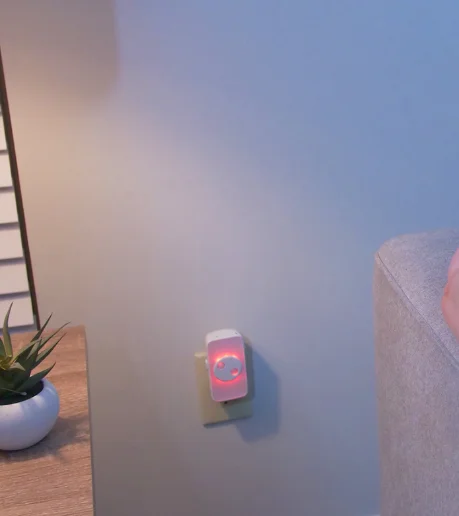
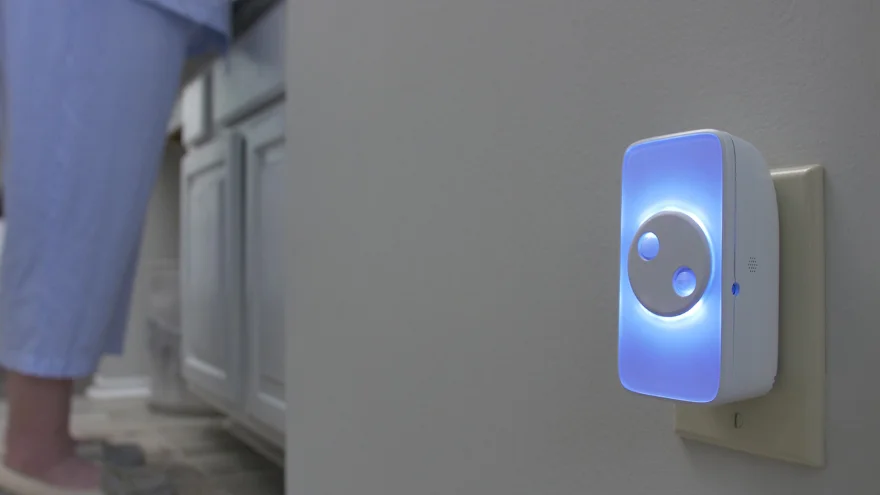
A home at night: a person’s slippered feet and pajama legs at the left edge, and the CareAlert glowing blue-white from a wall outlet on the right.

Balancing privacy and peace of mind

A device that watches over someone can’t feel like surveillance. The page had to promise safety and privacy in the same breath.

  • The productCareAlert — a plug-in smart nightlight that watches over an aging parent, with no camera and nothing to wear
The buyer

Written for two readers

Urgent enough to move the buyer, respectful enough that showing the page to Mom wouldn’t sink the sale.

The child, who buys it
The parents, who live with it
The concepts

The visuals started in the copy doc

I outlined the page’s visual concepts alongside its words: the capability wheel with the refusal at its hub, the split panels pairing each feature with the moment it serves, a comparison table built to end on privacy.

The close

Nearly three times the goal

The campaign ran in late summer 2020 and closed at $28,029 against a $10,000 goal, with pre-orders carrying the total to $29,922.

Campaign Highlights

Selected blocks from the shipped campaign page.

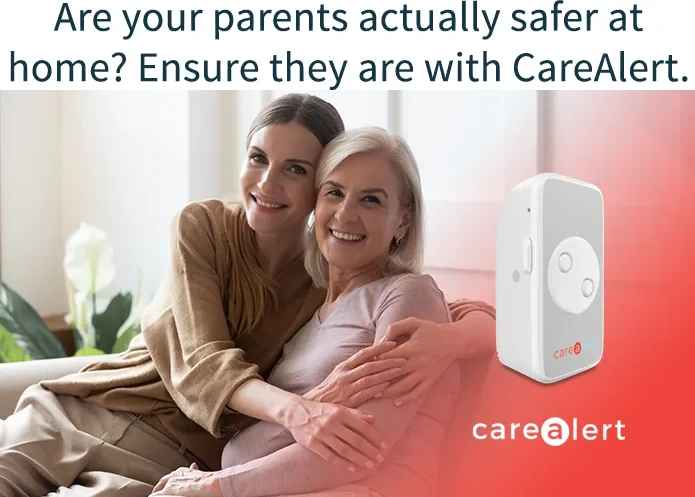
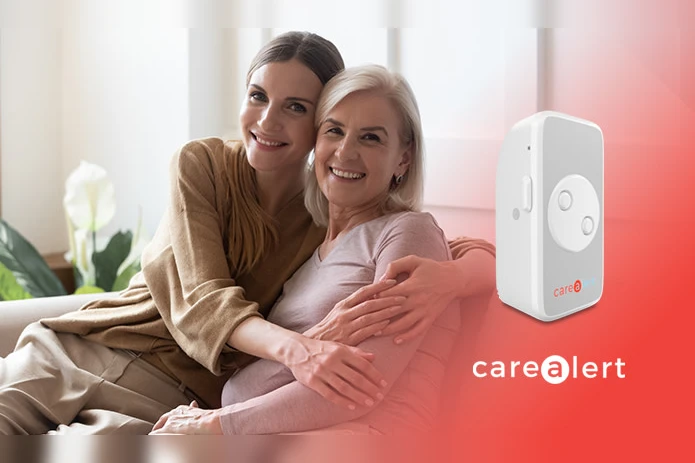
The campaign's opening block: the headline “Are your parents actually safer at home? Ensure they are with CareAlert.” above the key art — an adult daughter embracing her older mother on a sofa, with the white CareAlert device and wordmark on a red field at right.

One word does the work

The page opens on a question the reader has already asked themselves. Actually is the word carrying it, suggesting the reassurance they have been offering themselves may not survive checking.

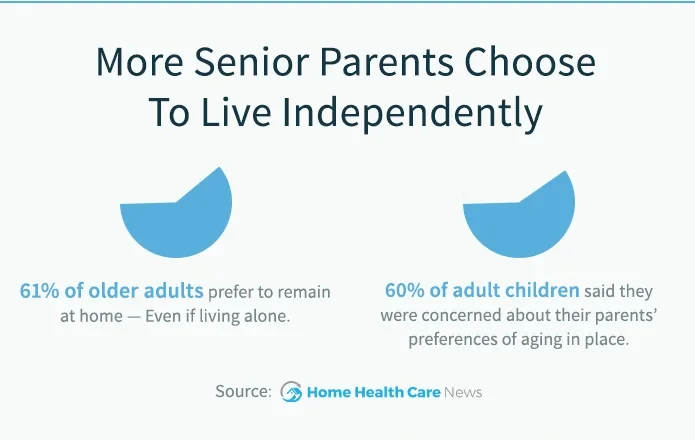
A statistics block headed “More Senior Parents Choose To Live Independently”: 61% of older adults prefer to remain at home even if living alone, beside 60% of adult children concerned about their parents’ preferences for aging in place. Sourced to Home Health Care News.

Both sides of the same room

Two figures, one for the parent who wants to stay and one for the child who worries about it. The section names the conflict before the product appears, so the device arrives as a settlement.

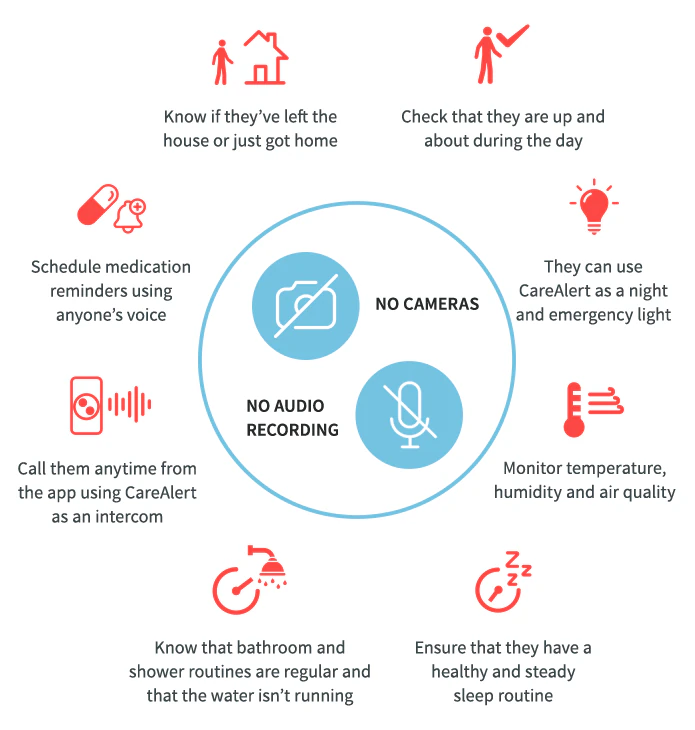
Eight capability icons arranged in a ring around a central hub reading “No cameras” and “No audio recording” — the two things the device refuses to do.

The constraint at the centre

Eight capabilities arranged around a hub that names what the device refuses to do. The limitation sits where a feature diagram would normally put its strongest claim.

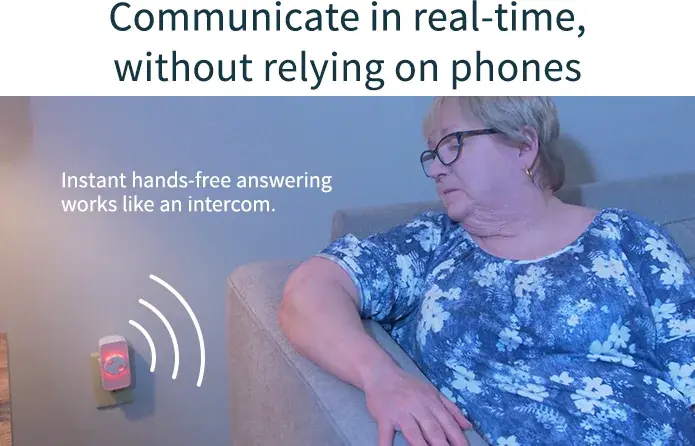
The real-time voice block: the heading “Communicate in real-time, without relying on phones.” above a photo of a woman in an armchair beside the wall-plugged device, drawn sound waves radiating from it, captioned as instant hands-free answering that works like an intercom.

No phone to fumble

The check-in lands in the room and answers itself hands-free — the parent never owns, charges or finds a device. The phone is the failure point this section designs out.

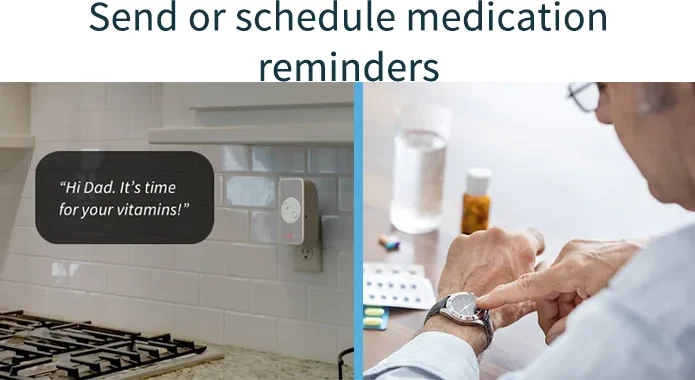
The reminders block: the heading “Send or schedule medication reminders” above a split panel — on the left, the device on a kitchen wall speaking “Hi Dad. It’s time for your vitamins!”; on the right, an older man checking his watch beside a weekly pill organizer.

In a voice they know

A medication reminder is a small feature until you notice it can be recorded by the family. The example on screen is addressed to Dad, which is a different product from a scheduled alarm.

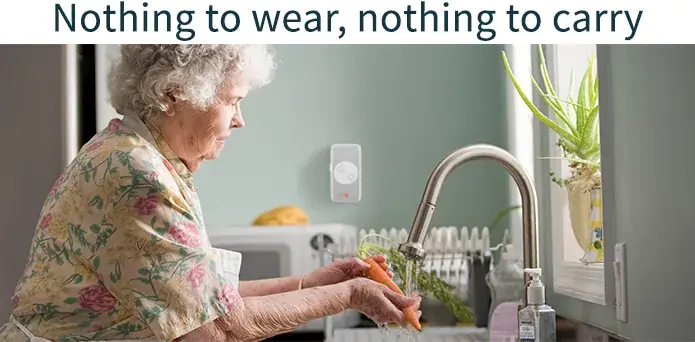
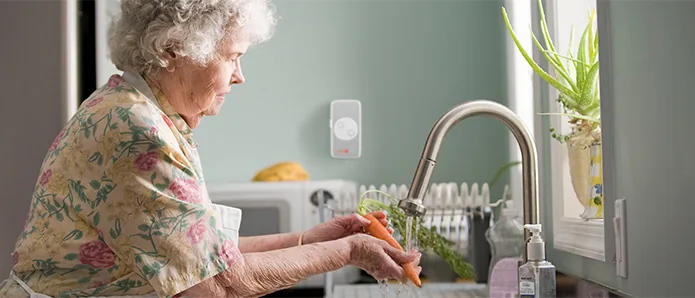
The heading “Nothing to wear, nothing to carry.” above a photo of an elderly woman in a floral blouse washing up at a kitchen sink, the CareAlert plugged into the wall socket beside her.

Nothing on the parent

Medical alerts hang a pendant on the body and make the parent carry the product everywhere. This section’s promise is subtraction — the home wears the device instead.

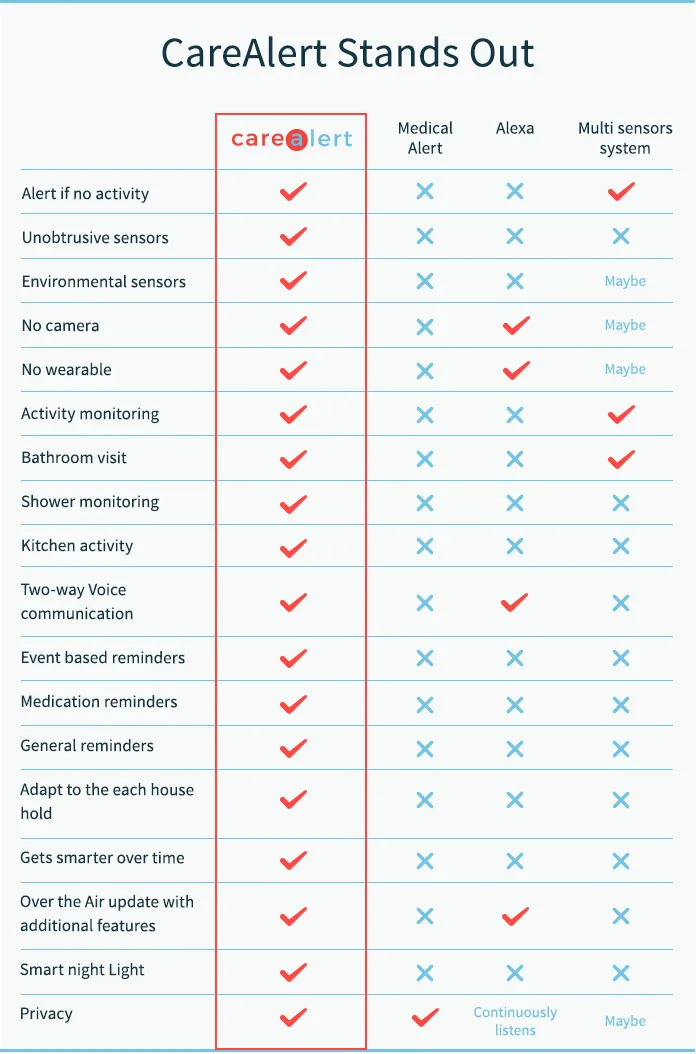
“CareAlert Stands Out” — an eighteen-row comparison table setting CareAlert against a medical alert, Alexa and a multi-sensor system, ending on a privacy row.

Ending on privacy

Eighteen rows against a medical alert, a smart speaker and a full sensor system. The last row is privacy, so the comparison closes on the one column where the others cannot follow.